
What we do here
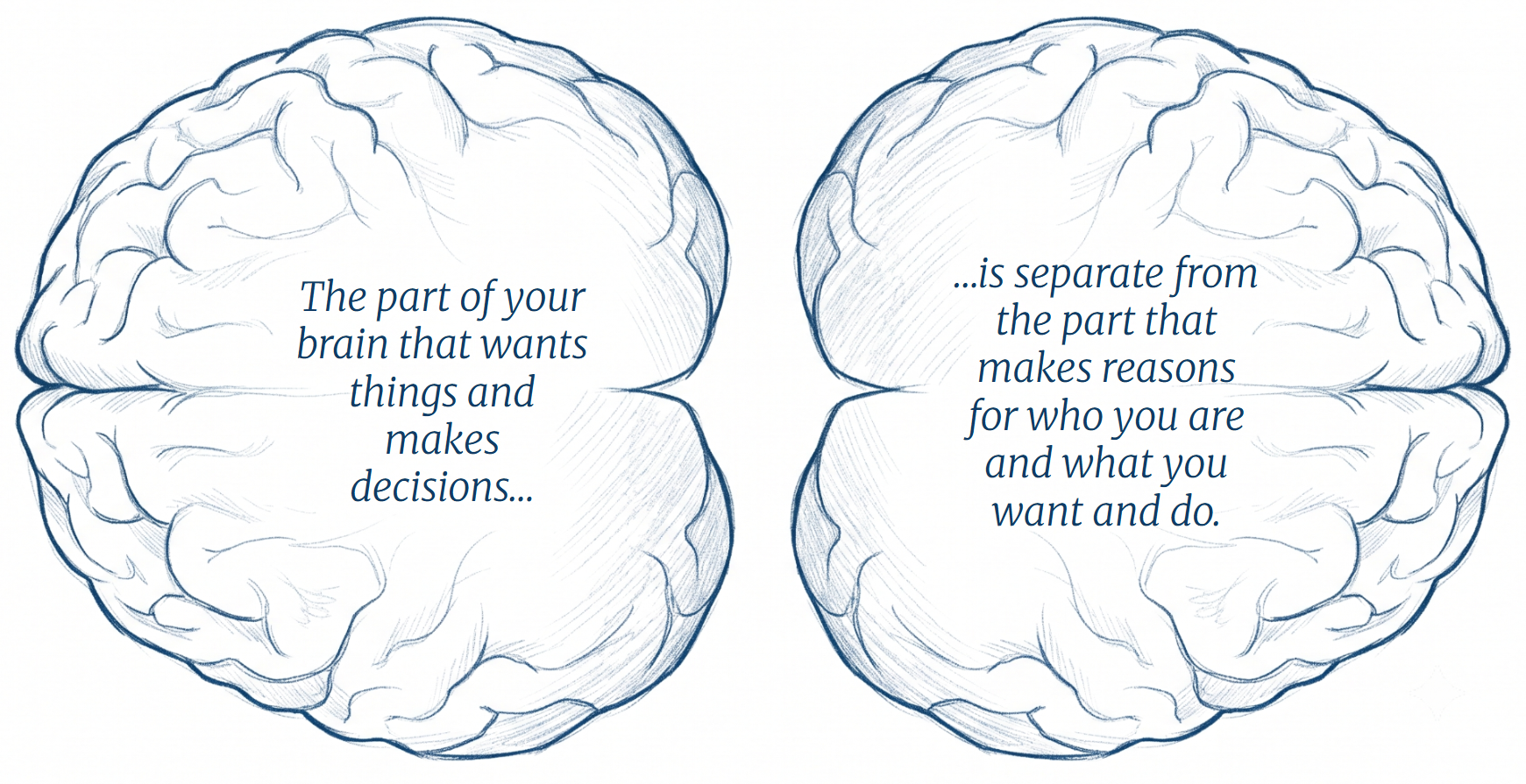
Most everything we do here that is clearly better than what you’d get elsewhere is based on a researched-to-death observation that is quite simple to type but is pretty revolutionary:
This isn’t a completely new idea. If you go back and read the first half of Walter Lippmann’s Public Opinion (originally published over a century ago in 1922), which laid the groundwork for George Gallup and the polling industry, you might be shocked to see just how skeptical he was about the value of public opinion. He openly mocks the notion you would conflate the common consensus with the truth, and is at best ambivalent about people’s ability to explain why they think what they think.
A couple generations of market and public opinion research slowly began to conflate “what people want” and “what people say they want,” until a new era of behavioral research, represented most notably by Daniel Kahneman or Richard Thaler, began to prise them apart again.
But the System 1/System 2 dynamic you may be familiar with still essentially works from the premise that all our decisions (or the wanting of our wants) should be based on sound logic. It’s just that we’re lazy or it’s impossible to do that all the time, and so we have heuristic hacks to get by.
This is not our view. While initially tempting, it is contradicted by many, many details and instances in our careers of researching opinions and behaviors and the reasons people give to explain them. Our updated understanding of how these things work is more influenced by branches of cognitive science, most notably the work of Hugo Mercier and Dan Sperber, as explained in many papers or compiled into the very excellent The Enigma of Reason.
In a nutshell, there are unconscious and irrational mechanisms in the brain which do the wanting and deciding and liking. “System 1” if you like. “Lizard brain.” Sure, ok, fine. But they are both separate from and influenced by a primarily social mechanism which develops reasons we could use to explain ourselves to others. Philosophers and mathematicians learned to hack this social mechanism to create the intellectual technology we call formal logic, and this is all to the good. But that’s not what the brain was intended for. When someone comes up with a reason (or more often repurposes a successful argument they’ve heard before) to rationalize their gut-level choices, they’re not being lazy or doing it wrong. They’re putting a social layer on top of individual choices.
One thing this means is: the reasons people give for their beliefs and actions are intertwined with their behavior, but are neither the same as nor fully separate from their “real” beliefs or desires or behaviors. Another thing it means is in more cases than not, “being logical” is a feeling or emotion in the rhetorical sense: being perceived as logical is equally persuasive whether or not you’re actually being formally logical.
This has real implications for how you study these things and what they mean when you observe them. TRL is in a sense a bet that we are better at translating those implications into useful real world research insights.
Now let’s take off the tweed blazer with the leather elbow patches, put this briarwood pipe on the shelf, and drag this lecture into the real world. There are nearly infinite ways to explain what we do here. But people like rhetorical triads. You can think of our process as requiring three pieces.
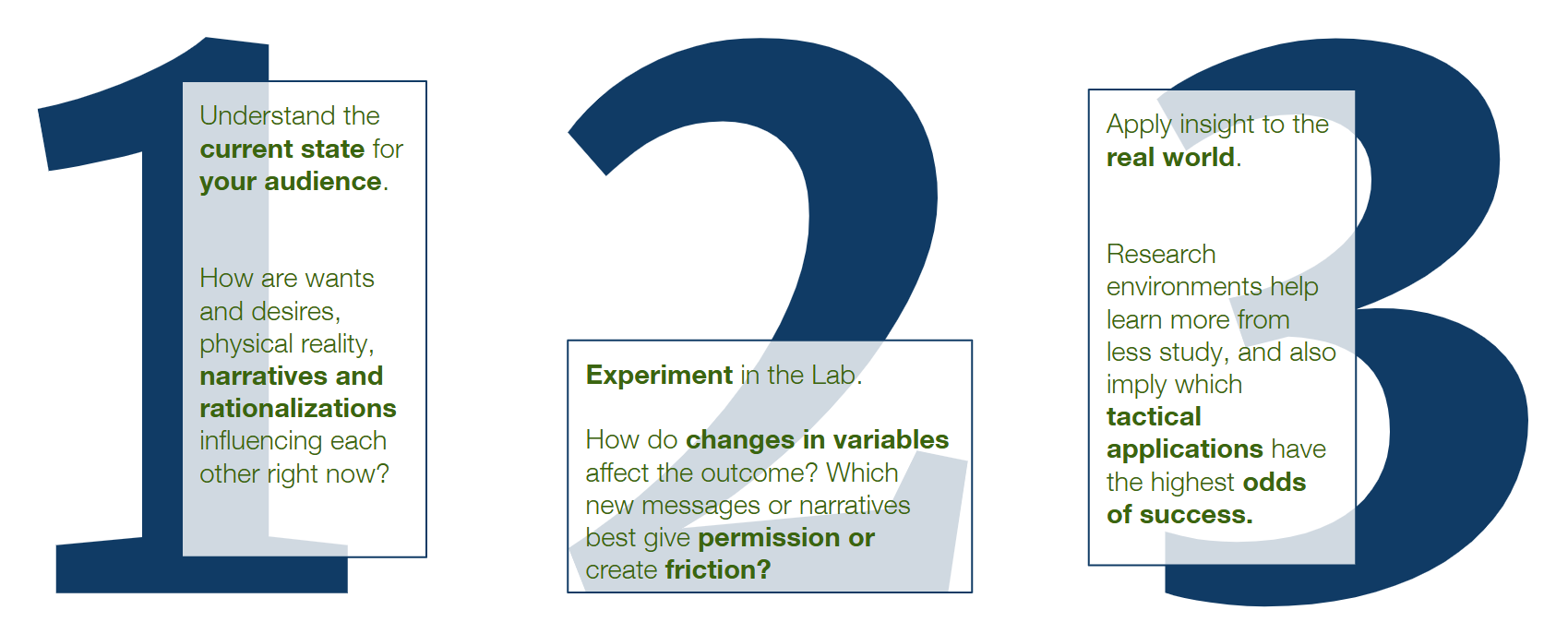
While we offer these services start to finish, you don’t necessarily need to buy them all from us. You might already have a lot of behavioral or survey or business data and a good understanding of your audience today, and just need lab work on what might change the narrative. You might already have plenty of current state and experimental data and be stuck making decisions about what to try first in the real world. Other organizations have full faith in their tactical marketing, public affairs, and communications teams but just need the key insights to have them build campaigns and strategies on. All of these are fine.
But there are some typical use cases for what we do around here.

Make sense of All The Data
“We have a lot of raw material that is supposed to be leading to specific things we can take action on.
But it’s…not? What gives?”
–You say more about this

Explain how something works
so other people get it
“We know something for sure, but whenever we try to explain it, people’s eyes glaze over, or they start arguing about something else before we even finish, or they drag a bunch of red herrings across the trail.
Why won’t they listen?”
–You say more about this
Increase support and minimize
or neutralize opposition
“I am advocating for something. More people should support it and take action! And some of those people who disagree with me should come see the light! Or at least get distracted or stop caring.”
–You say more about this

Change how people understand the
general narrative of Your Thing
“Right now people think of My Thing in a certain way, but that’s got to change. [It’s outdated and no longer true / We’re tired of being reactive and letting others define us. / It’s newish and people don’t appreciate it yet.]”
–You say more about this

Time-boxed issues messaging,
proactive or reactive
“I’ve got something coming up that I know will be tough to communicate or explain, and I want to get ahead of it.” Or, “Something just happened and I need to react, to know the best message, and quickly.”
–You say more about this